Twenty-seven years in the Army
I received my commission in May 1989 and served on active duty from May 1990 until I retired on September 30, 2016, mostly in Army Aviation. I was an attack helicopter platoon leader, a logistician, a maintenance company commander, a battalion commander, and a staff officer in places from Kansas to Belgium. This page is a plain record of where I served. The lessons I took from it are at the bottom.
Where I served
| Years | Role | Where |
|---|---|---|
| 1986 to 1988 | Marine Corps Officer Candidates School (1986), ROTC Basic Camp (1987), ROTC Advanced Camp (1988) | Summers during college |
| 1989 | Commissioned after ROTC graduation | University of Dubuque, Dubuque, Iowa |
| 1990 to 1991 | Initial Entry Rotary Wing course (UH-1 Huey, AH-1 Cobra), then AH-64 Apache qualification | Fort Rucker, Alabama |
| 1991 to 1994 | Attack battalion platoon leader (two years), then logistics officer (one year) | Fort Riley, Kansas |
| 1994 to 1995 | Captains Career Course, then aviation maintenance course | Fort Rucker, Alabama |
| 1995 to 1996 | Support operations officer for aviation, 127th Aviation Support Battalion, 4th Aviation Brigade. Deployed December 1995 to Bosnia as forward support operations officer | Hanau, Germany, and Bosnia-Herzegovina |
| 1996 | Rear detachment commander | Hannover, Germany |
| 1996 to 1998 | Attack battalion aviation operations officer, then maintenance officer and company commander, D Company, 1-501st Aviation (250 soldiers). Led the company on a one-year peacekeeping deployment | Hanau, Germany, and Tuzla, Bosnia-Herzegovina (1997 to 1998) |
| 1998 to 1999 | Aviation representative and chief of aviation ground support equipment, Directorate of Combat Developments | Fort Rucker, Alabama |
| 1999 to 2001 | Executive officer, 1st Battalion, 145th Aviation (flight school and air traffic control school) | Fort Rucker, Alabama |
| 2001 to 2003 | Command and General Staff College, then the School of Advanced Military Studies master's program | Fort Leavenworth, Kansas |
| 2003 to 2005 | 101st Airborne Division (Air Assault): brigade support operations officer, then commander of B Company, 9-101st Aviation (aviation maintenance). Deployed to Iraq in my second year | Fort Campbell, Kentucky, and Balad, Iraq (2003 to 2004) |
| 2005 to 2008 | G3 (operations), U.S. Army NATO Brigade. Ran operations and pre-deployment training for U.S. forces in Europe and led the brigade's move to Heidelberg | Belgium and Heidelberg, Germany |
| 2008 to 2011 | Commander, 122nd Aviation Support Battalion, 82nd Airborne Division, supporting the Combat Aviation Brigade (about 850 soldiers). Deployed to Kandahar for 13 months | Fort Bragg, North Carolina, and Kandahar, Afghanistan (2010 to 2011) |
| 2011 to 2012 | Helped move U.S. Army Forces Command headquarters from Atlanta to Fort Bragg and led its Disaster Response Center. Then attended dual-engine airplane qualification at Fort Rucker on the way to Fort Worth | Fort Bragg, North Carolina |
| 2012 to September 2016 | Department of the Army Representative to the FAA: restricted airspace and air traffic oversight for military installations from Fort Bliss to Michigan | Fort Worth, Texas |
Four deployments
I deployed four times: Bosnia-Herzegovina twice, then Iraq, then Afghanistan.
Bosnia-Herzegovina, 1995 to 1996. I deployed on December 22, 1995, as the forward support operations officer for the 4th Aviation Brigade. My job was getting aviation parts from the division support command to the brigade so aircraft could keep flying. I also flew the Apache in support of the mission. Bosnia was full of landmines, so every step off the road was a decision.
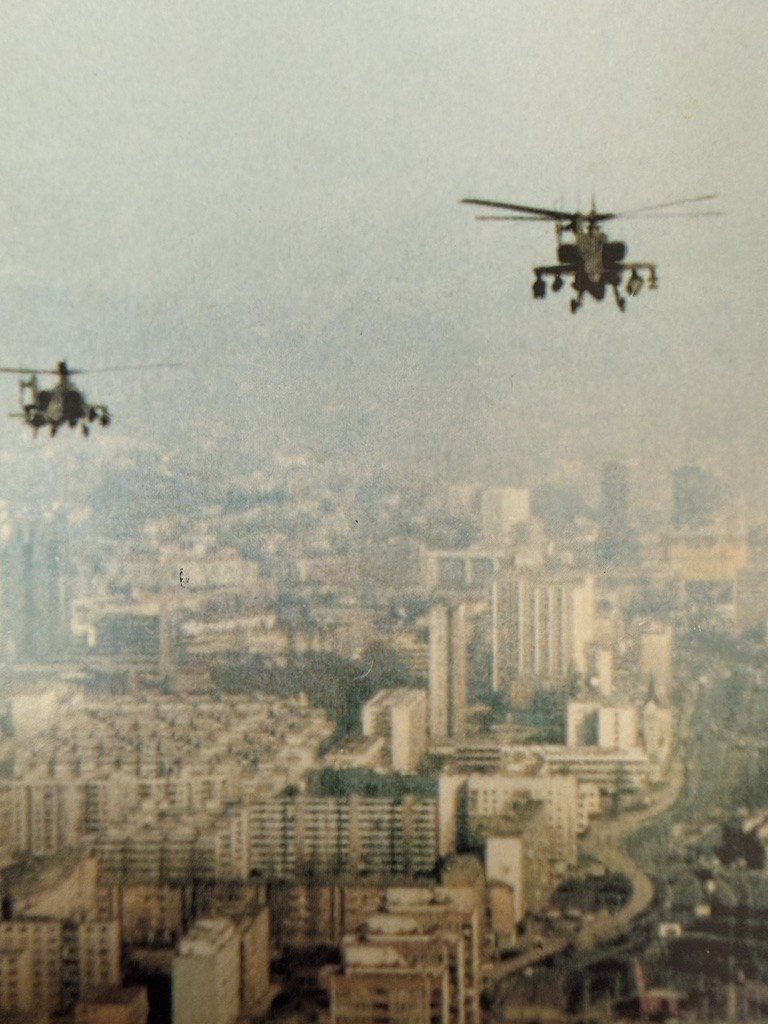
Escorting the President. During this deployment I flew Apache escort for President Clinton's visit. I trailed him and his entourage as they toured Sniper Alley in Sarajevo in low weather, to help keep him protected, and I flew the same support when he departed. On the day he left, a group of Serb soldiers came out of their barracks with armored vehicles near the path he would take, on a day when no training was scheduled. It was a tense moment. I flew an armed circular pattern around them, with my weapons pointed in their direction, until the President was out of sight. They stood down.
Bosnia-Herzegovina, 1997 to 1998. I came back to command D Company, 1-501st Aviation, with 250 soldiers, stationed in Tuzla for a year of peacekeeping. We kept aircraft ready and trained, including aerial gunnery. I tried to take the harsher duties off my soldiers, especially on holidays when no one was with their families. One Thanksgiving, I stood guard at the main gate myself so my soldiers could rest and enjoy a real holiday, no matter where we were.
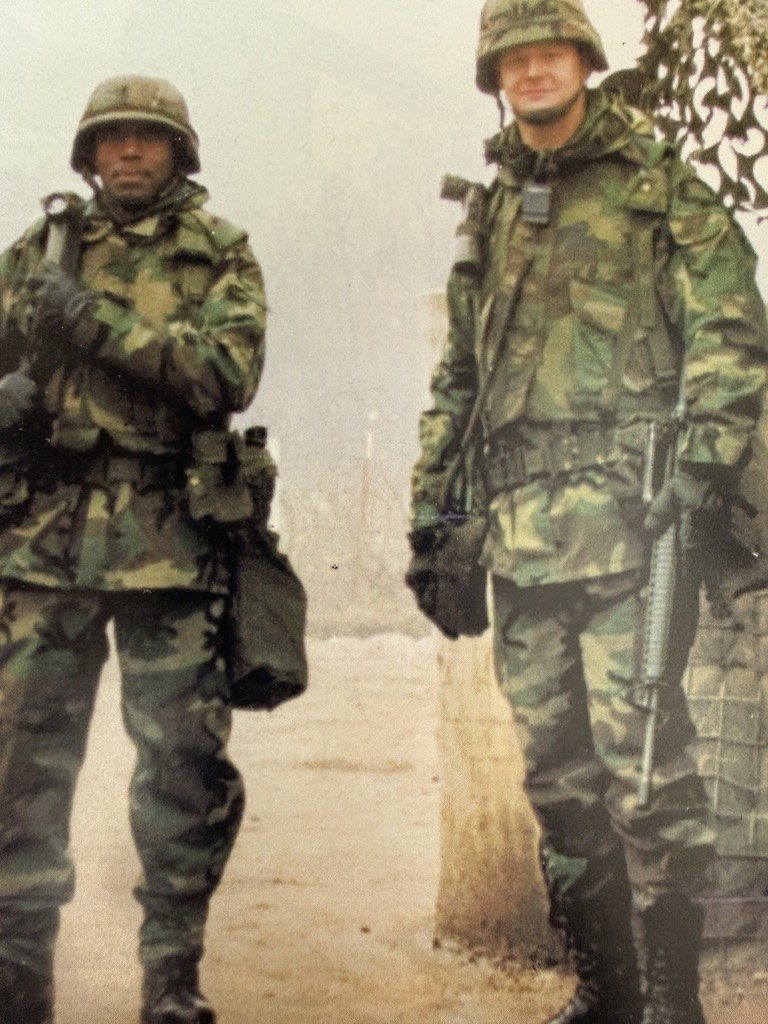
Iraq, 2003 to 2004. I commanded B Company, 9-101st Aviation, the aviation maintenance company in the 101st Airborne Division (Air Assault), and I supported the brigade from Balad. It was a 24-hour-a-day mission, and we were hit with mortars multiple times every day while we tried to do our job.
Afghanistan, 2010 to 2011. I commanded the 122nd Aviation Support Battalion, which supported the 82nd Combat Aviation Brigade, for 13 months in Kandahar. Before we left, I was responsible for moving the entire brigade through nine ports, starting in January 2010. We loaded ships and Air Force C-5 and C-17 aircraft and ran the logistics points where people and equipment passed between North Carolina and Afghanistan. I returned in April 2011.
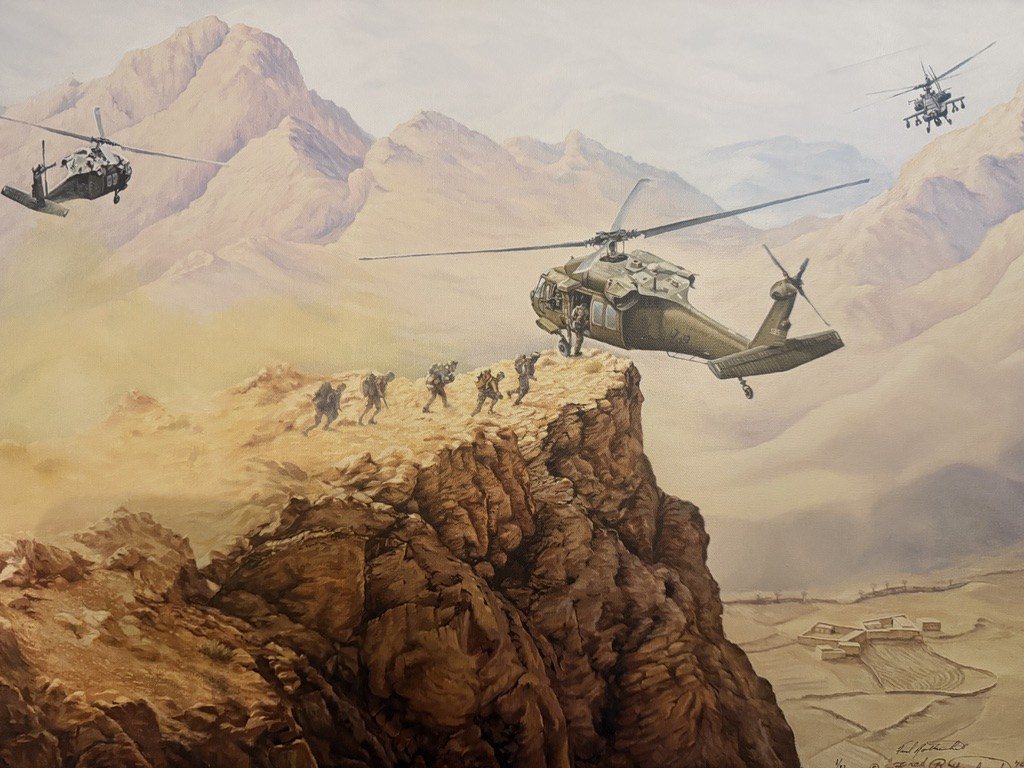
Afghanistan had been through decades of war, including the Soviet war of the 1980s. My job was to build the logistics network and support the aviation brigade in the fight against the Taliban. I had soldiers at five forward operating bases and at the main base in Kandahar. I flew mission support, and I worked on the ground in planning cells, recovery operations, and the fuel and ammunition points that served aircraft across the region. My soldiers included medics, warehouse and transportation soldiers, ground and aviation mechanics, signal and IT specialists, cooks, parts clerks, religious support staff, and fuel and ammunition specialists.
The hardest part wasn't the job. It was the loss of life. We held ramp ceremonies, where fallen soldiers were carried in flag-draped coffins onto C-17 aircraft, night after night for 13 months. Rockets and machine-gun fire came in day and night, and those sounds still make soldiers who were there nervous today. Leading in that environment was hard, but my earlier deployments had prepared me for the anxiety, family worries and personal problems soldiers carried, as well as the enemy.
What it was like
Deployments were the hardest part of my family's life and mine. Our first daughter, Hilary, was born at 27 weeks while I was in flight school, and I completed my training around her birth. It was the first time my family took a back seat to the Army's needs, and it wasn't the last. Two of our daughters were born overseas during military assignments. I'm proud of the soldiers I led and the people I served with.
What I took from it
- Plan the whole move, then plan for what goes wrong. Every mission had a backup plan and a reason for each step. I use the same habit with every transaction.
- Say what you know and what you don't. Good decisions start with honest information, including honest bad news.
- Take care of the people. The mission gets done by people who trust you. Clients are the same.
- Stay calm. People borrow your calm when things get loud.
Related
If you are a service member or veteran planning a move, you can read how I work with military and veteran families on my About page at Lone Star Realty.